SOME HIGHLIGHTS OF THE RUSKIN COLLECTION
More works from the Ruskin Collection can be viewed online via the ArtUK website, HERE.

The charity for arts, crafts and the rural economy, founded by John Ruskin in 1871.
More works from the Ruskin Collection can be viewed online via the ArtUK website, HERE.
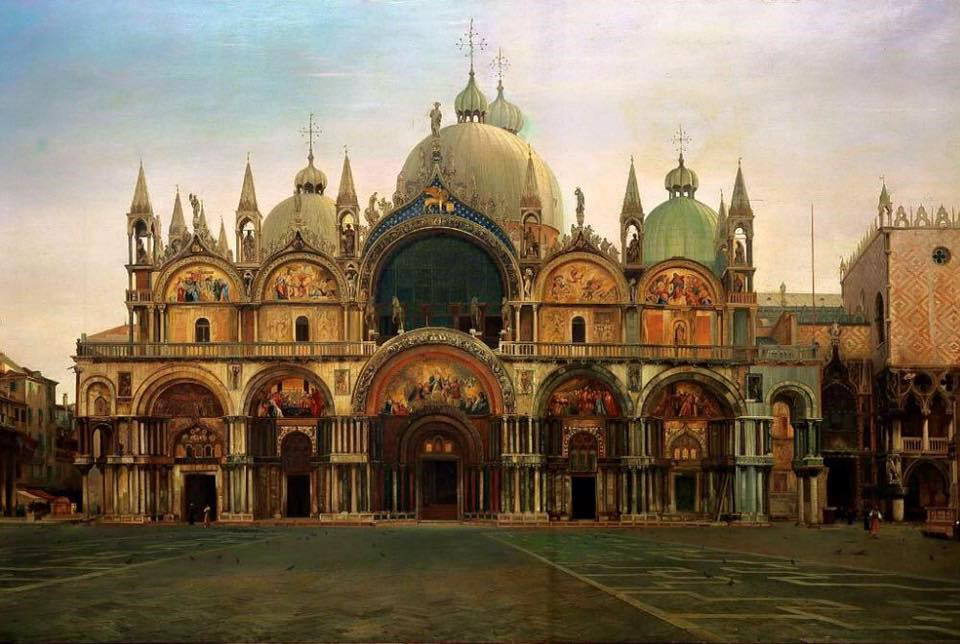
(1877-1882) by John Wharlton Bunney (1828-1882).
Bunney's painting of San Marco served as the centre-piece of the Ruskin Collection's first home in the St George's museum at Walkley, and it remains a popular work in the collection today.
Commissioned by Ruskin for the fee of £500, it is a large painting, measuring more than 6 feet across; the unusual level of detail reflecting the painting's intended function as an accurate architectural record.
Cook and Wedderburn, editors of Ruskin's Complete Works, recorded that 'the artist spent upon it no less than six hundred days' constant labour' (Works, 10, p. lxiii).
Watch a short film about the painting made by Sheffield Museums HERE.
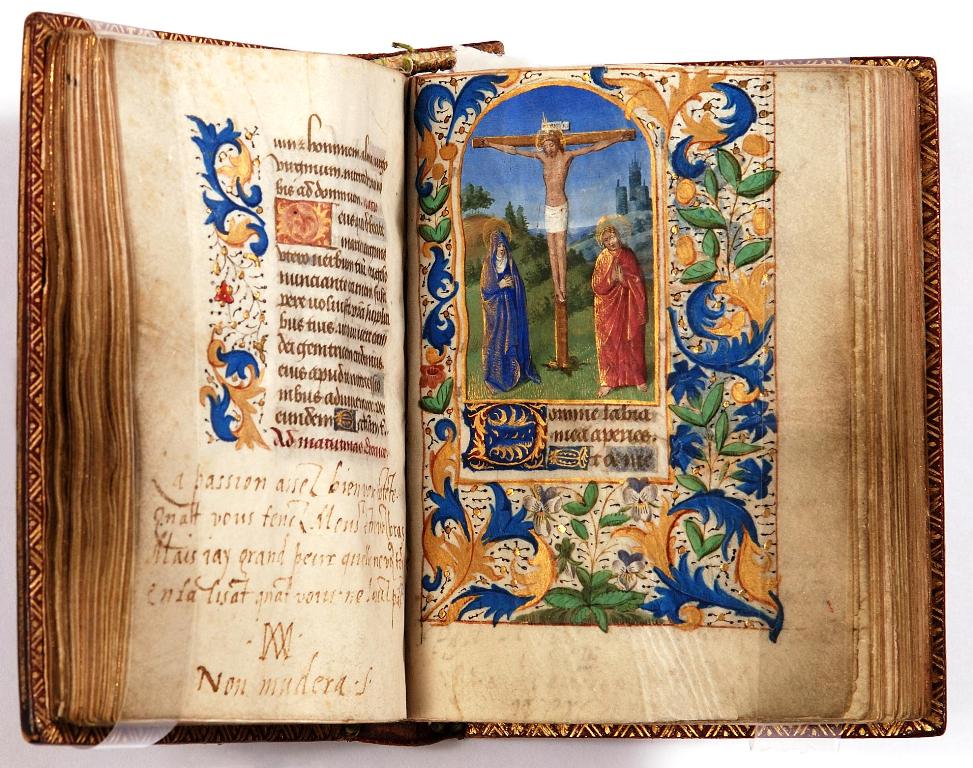
By or workshop of Jean Fouquet, about 1415-20
On vellum
1460-1465
Book of Hours (Horae Beatae Mariae Virginis), vellum, bound in red leather (eighteenth century) with red leather case. 178 folios containing 25 full page illustrations and numerous illuminated borders. Numerous later inscriptions of the sixteenth century in black ink, and several sixteenth century illustrations
This manuscript contains prayers to be read throughout the day and on different days in the year. It was used in the late 1500s by a French aristocrat, Lady Diana de Croy, as an autograph book. It includes a message from Mary, Queen of Scots.
It is possible that the illustrator of the book of hours was Jean Fouquet of Tours
Number of borders:153
Number of Illustrations: 22
Number of illuminated initials (decorative text in more than one colour) approximately 1156
No historiated initials
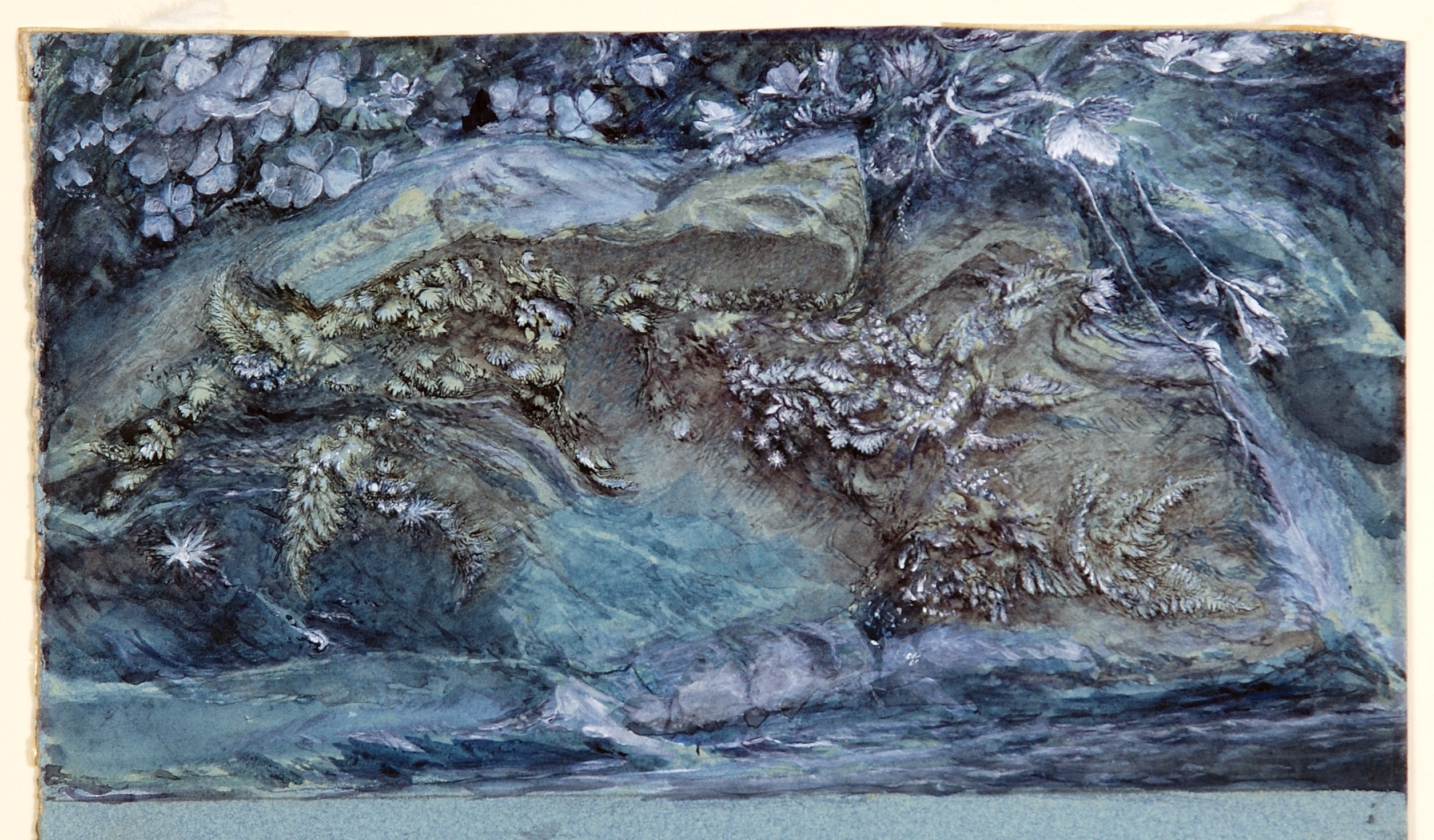
by John Ruskin
Pen, ink, and watercolour on paper
Painted over a four-year period, this small work is a beautiful example of Ruskin's ability to find profound wonder and spiritual beauty in nature's smallest, most easily overlooked elements.
In 2019, it was described by The Guardian's art critic Jonathan Jones as 'a mesmerising portrayal of green life entwined in the ancient scars and turbulent strata of a steep rocky mass.'
Read a Country Life article about this picture and the artist HERE.
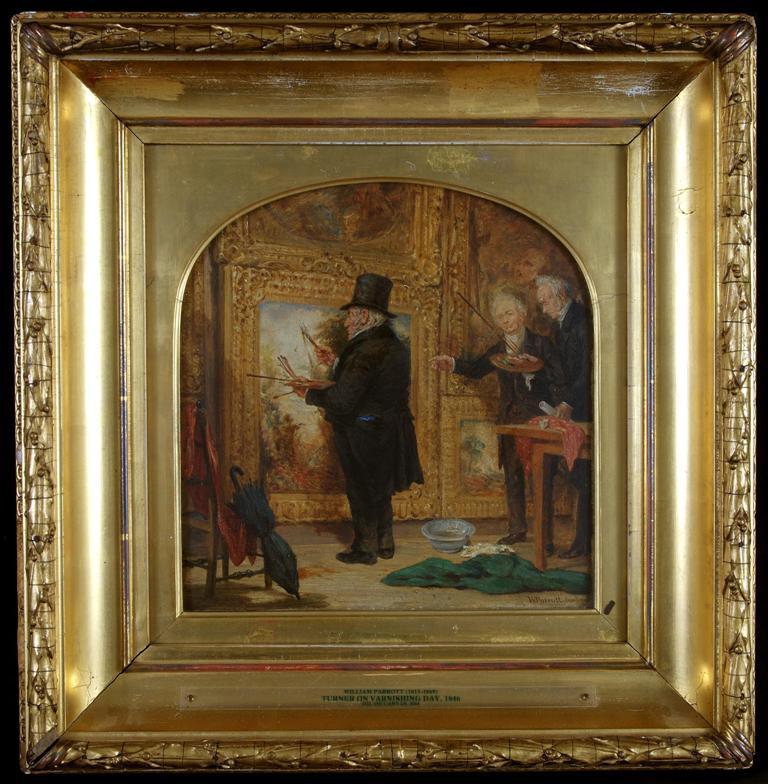
Oil painting by William Parrott, 1846
The painting captures the painter JMW Turner—then in his early 70s—standing in a top hat with a short brush in hand, making last-minute touch-ups to his painting before the opening of the annual summer exhibition at London's Royal Academy. "Varnishing Days" were special days before the exhibition opened, allowing artists to add a final coat of varnish to their hung works. Turner famously used this time not just to varnish, but to add finishing touches to his work, once he could see the context in which his painting was hanging.
Watch a short video about the painting from Sheffield Museums HERE.
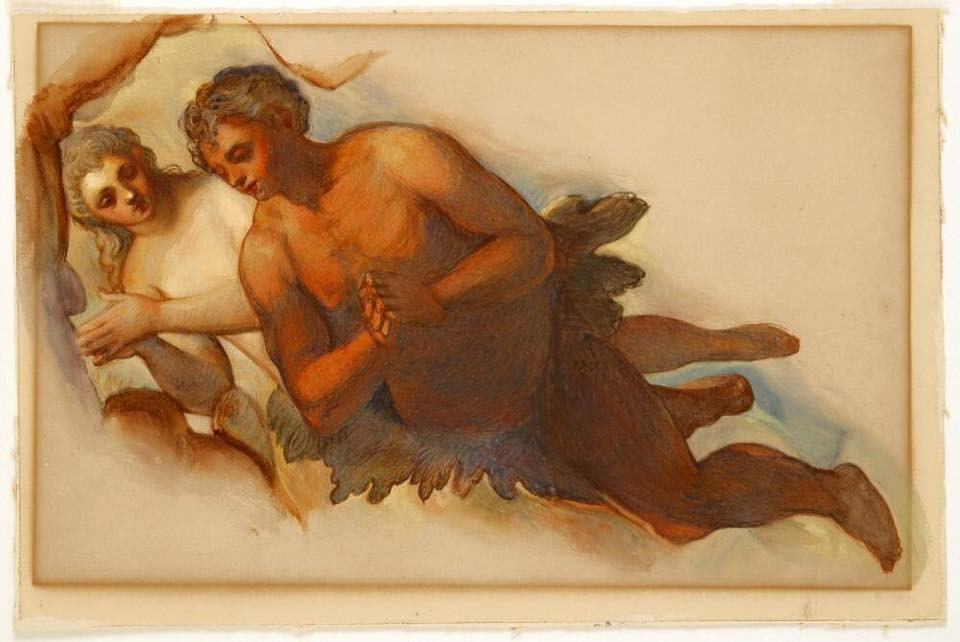
Ruskin considered Tintoretto's "Paradiso" (or “The Paradise”) "the most precious thing Venice possesses" and the greatest work Tintoretto ever created. It is over 10 metres tall and 25 metres wide and covers an entire wall of the council chamber in the Doge's Palace. This painting depicts only a detail.