New Millais displays in Perth
Peter Burman reviews the 'Millais in Perthshire' displays at Perth Art Gallery, featuring new long-term loans from the Millais family.

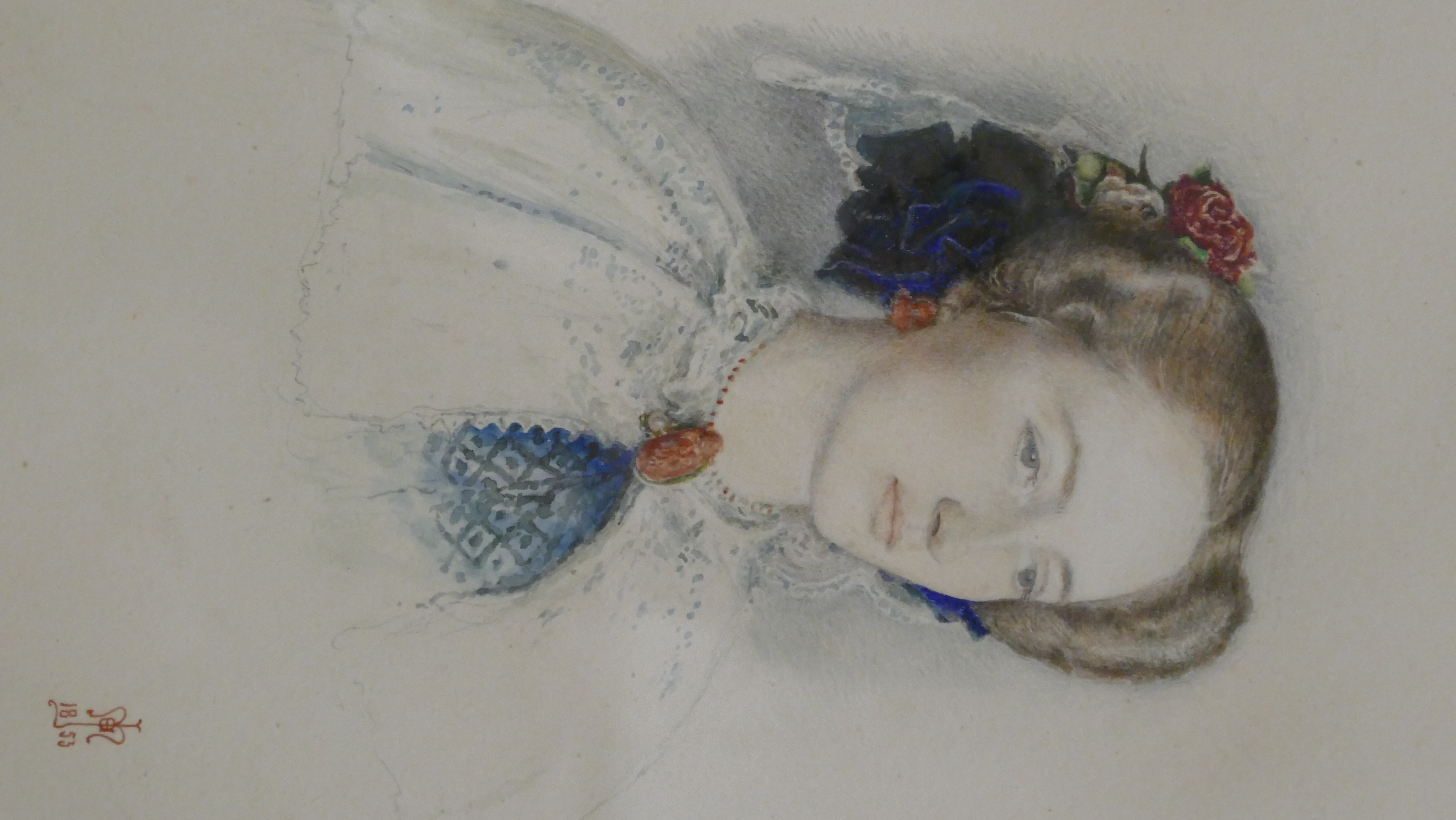
Euphemia (Effie) Chalmers Ruskin (nee Gray) later Millais' wife, 1853. by John Everett Millais (b. 1829, d. 1896)
The fair city of Perth is one of our favourite haunts in Scotland for cultural history and heritage. It has a medieval central church, St John’s Kirk of Perth, well-known for its craftsmanship and the many changes wrought in the 20th century by architect Sir Robert Lorimer and the craftspeople he gathered around him. It has a Scottish Episcopal cathedral designed by William Butterfield. And it has a fine new Museum, where the Stone of Destiny is now presented.
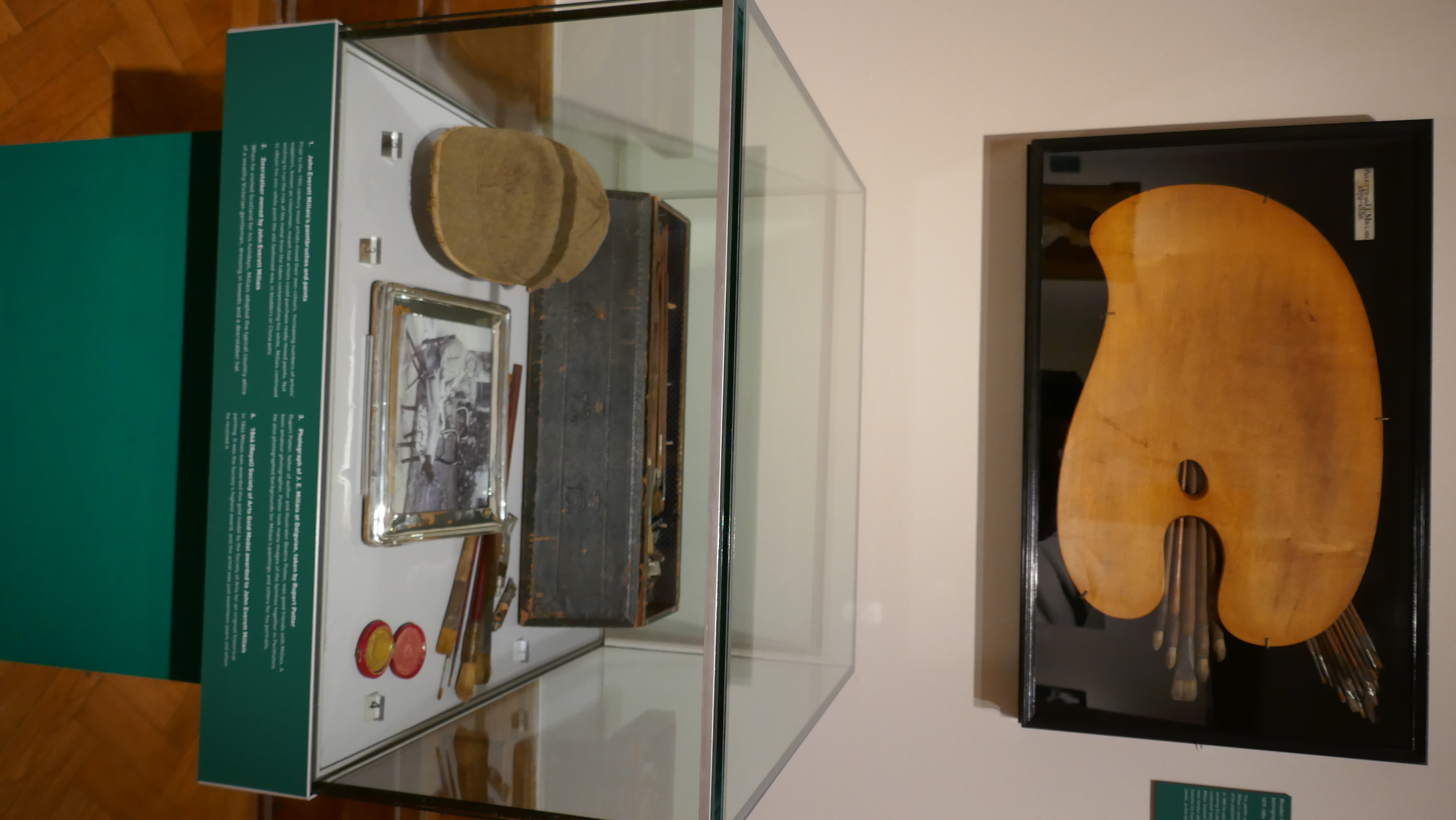
Last year’s opening of the Museum, in the former City Hall, has freed up space within the renamed Perth Art Gallery, which is always on the lookout for items or collections eloquent of Perth and Perthshire. So it was exciting to learn that Sir Geoffroy Millais, great-grandson of the painter Sir John Everett Millais and his wife Euphemia (Effie) Gray (previously married to John Ruskin), has made a long-term loan of a private collection of 300 artworks and personal belongings of the artist and his wife. They have been beautifully presented in an exhibition which opened in late July. The collection includes 19 oil paintings, more than 150 works on paper, personal correspondence, studio tools such as the artist’s paint brushes and palettes, and Effie Gray’s lace, jewellery and family heirlooms. Guild Companion Suzanne Fagence Cooper has already made excellent use of this material, through special access, in her most enjoyable book Effie, The Passionate Lives of Effie Gray, Ruskin and Millais, Duckworth Overlook, 2016 edition.
On entering the room where the collection is mainly shown, the eye is seized at once by a map of Perthshire on which are marked twenty-two sites associated with Millais. Well-known are Bowerswell House, home of the Gray family, and Brig o’ Turk, where the painter fell in love with Ruskin’s wife, and she with him, while working on the first stage of the powerful portrait of Ruskin, standing on a rock in the turbulent waters of the stream, which is now one of the treasures of the Ashmolean Museum in Oxford.
But there are many more including houses which the painter and his wife took for holidays and painting expeditions while their young family was growing up, so that they were fully conscious of their Perthshire heritage. We also come to appreciate the enthusiasm of Everett (his second name, so called within the family) for field sports, especially for the high skills of salmon fishing. The stuffed salmon which is one of the exhibits has the following inscription: ‘SALMON (MALE) 44 lbs caught with fly on the Tay (Murthly Water) by J. E. Millais Bt RA Oct 8th 1884.’
Millais was born in Southampton in 1829 and was a child prodigy, admitted to the Royal Academy as a student at the astonishingly early age of eleven. Together with his friends the painters Willam Holman Hunt and Dante Gabriel Rossetti he founded the Pre-Raphaelite Brotherhood in 1848. Their radical departures from the style of painting advocated by the Royal Academy made them famous and, at the same time, controversial. Ruskin came to their defence in no uncertain manner and by the summer of 1853 he was on sufficiently warm terms to invite Millais and his brother William to join him and his wife Euphemia (‘Effie’) on a painting holiday at Brig o’Turk in the Trossachs. Two of the most intriguing images in the exhibition are the drawings in pen and brown ink of, first, his tiny cupboard-like sleeping quarters in the cottage which he shared with Ruskin and Effie (his brother opted for the local hotel); and, secondly, of himself bathing in the stream with nearby a female figure who could only be Effie. The first is labelled ‘My Feet Ought to be Against the Wall’ and the second is labelled ‘Shower Bath in the Highlands’.
The star of the show is the exquisite watercolour (left) of Effie which Millais painted during their informal courtship during the summer of 1853. It shows her as a radiantly beautiful young woman perhaps unconsciously beginning to realise that her future happiness lay rather with Millais than with Ruskin, who had refused or been unable to consummate their marriage.
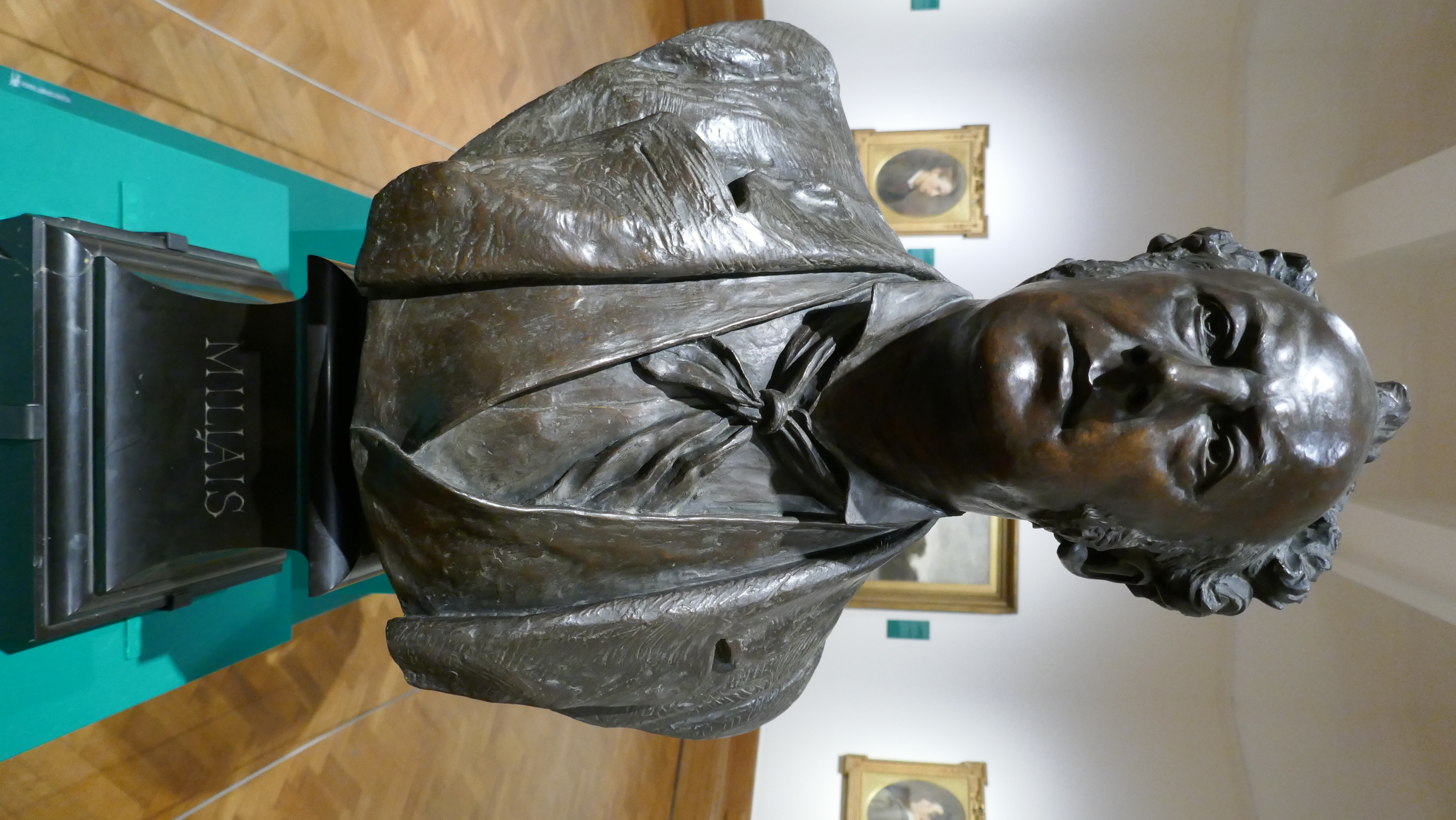
Bust of Millais by Joseph Edgar Boehm, 1882
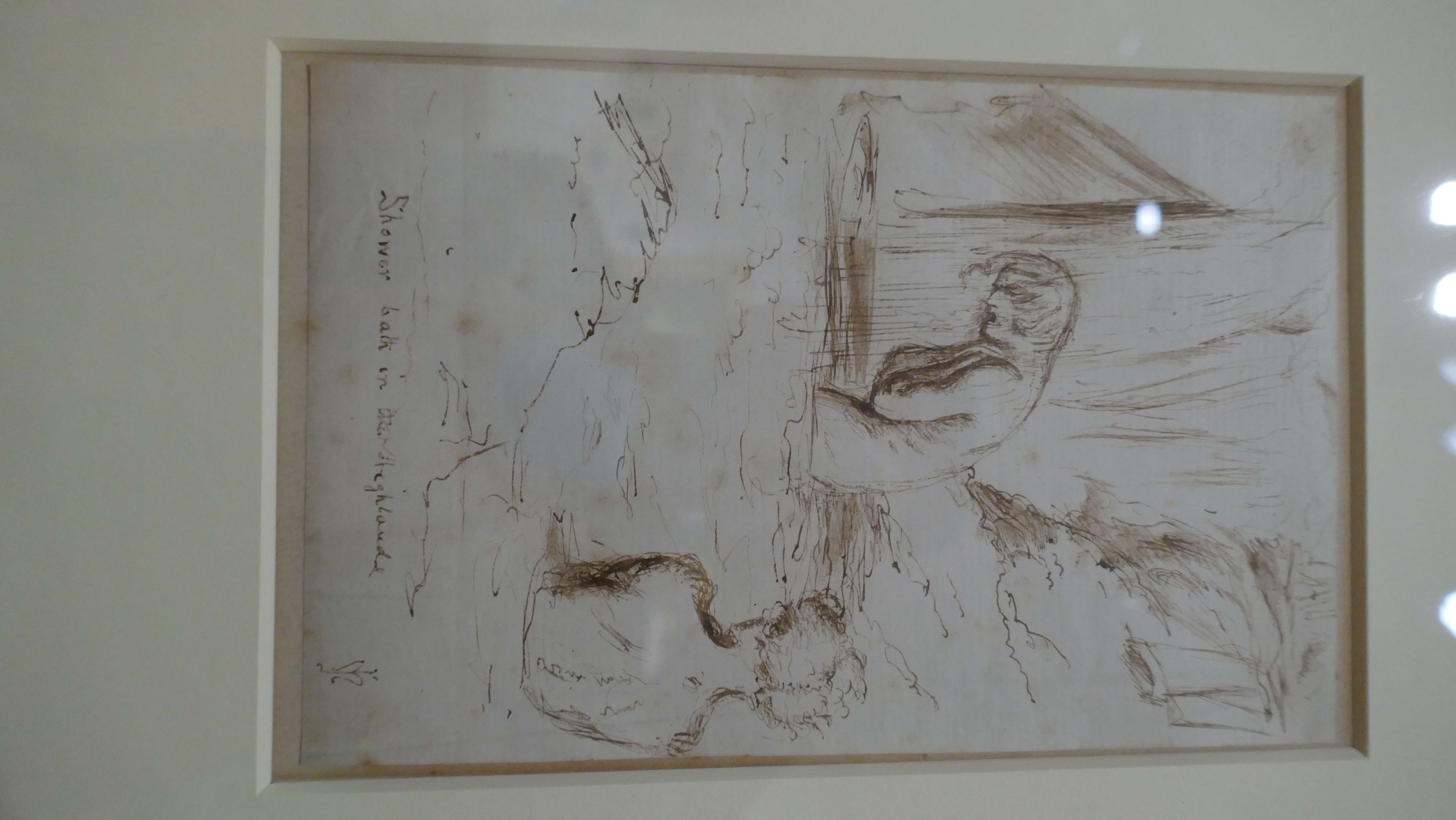
Shower bath in the Highlands
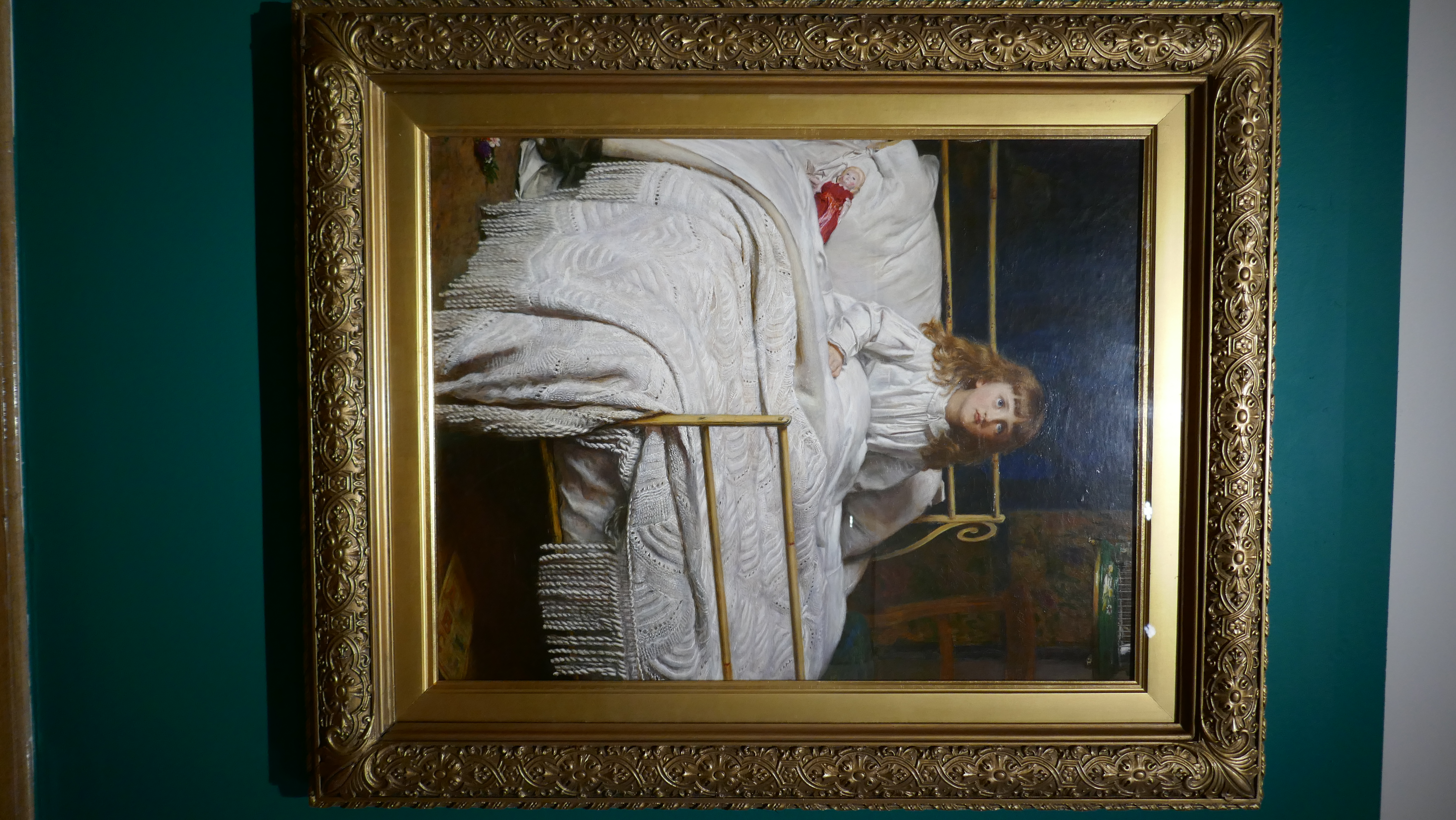
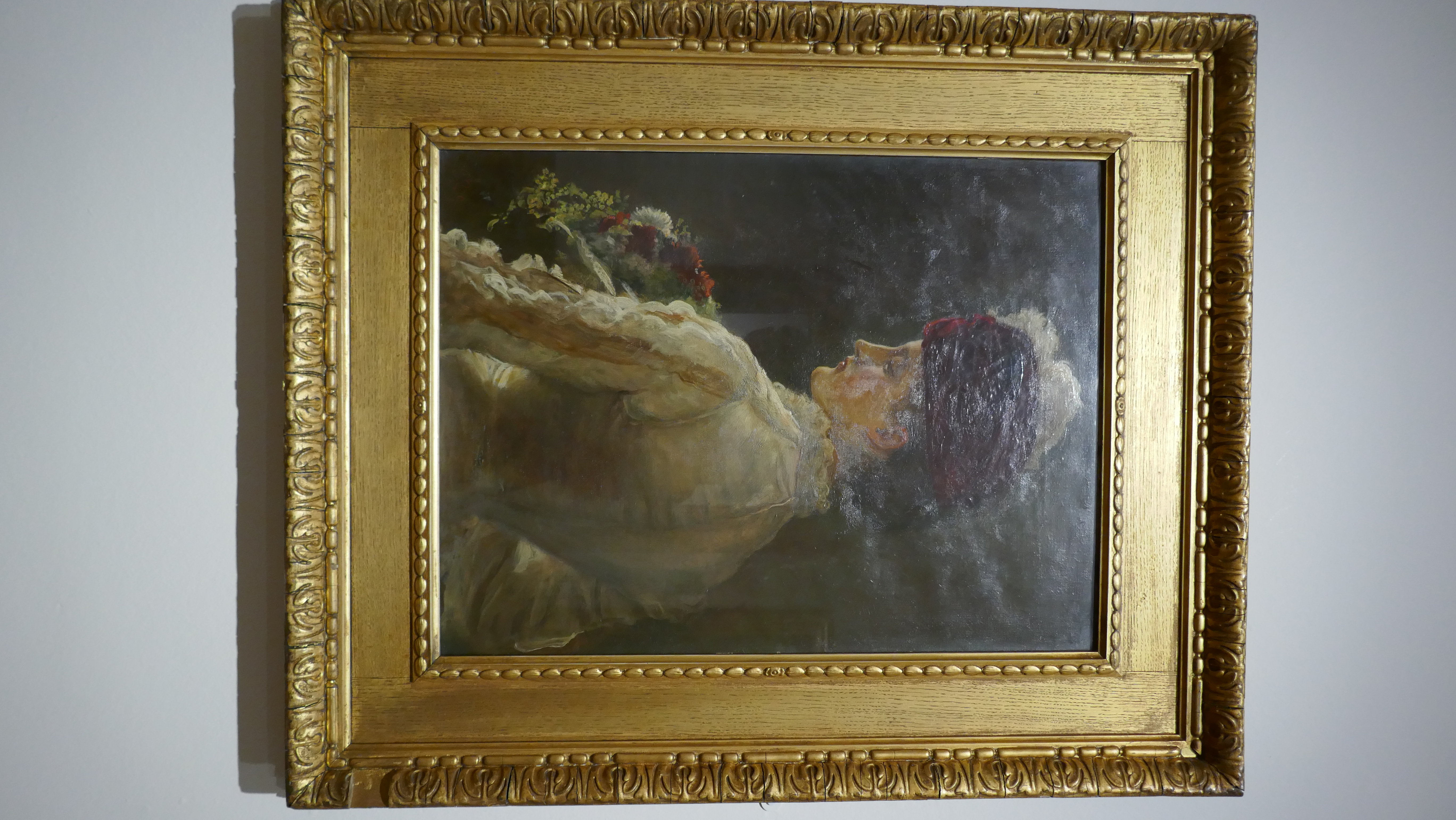
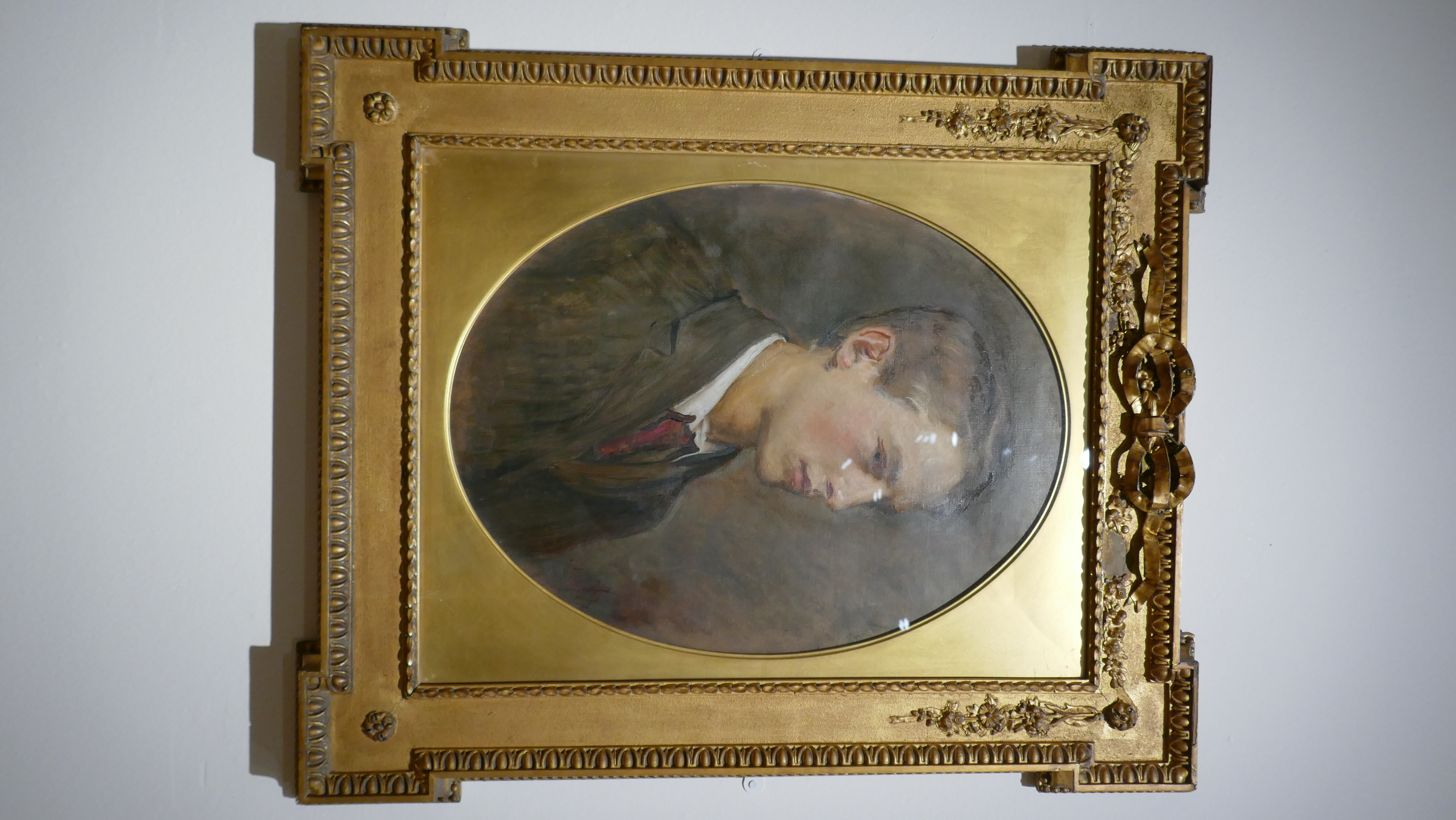
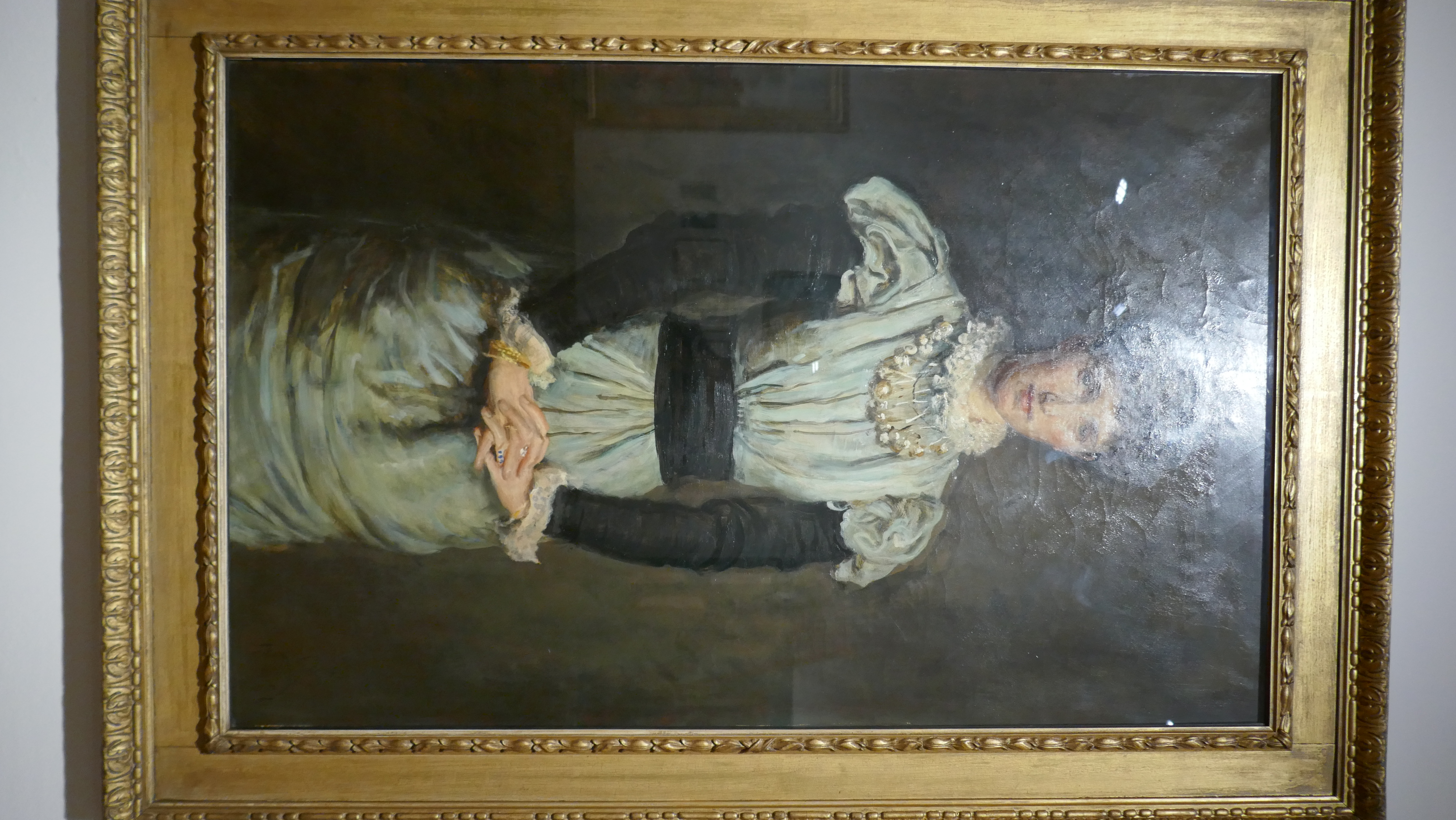
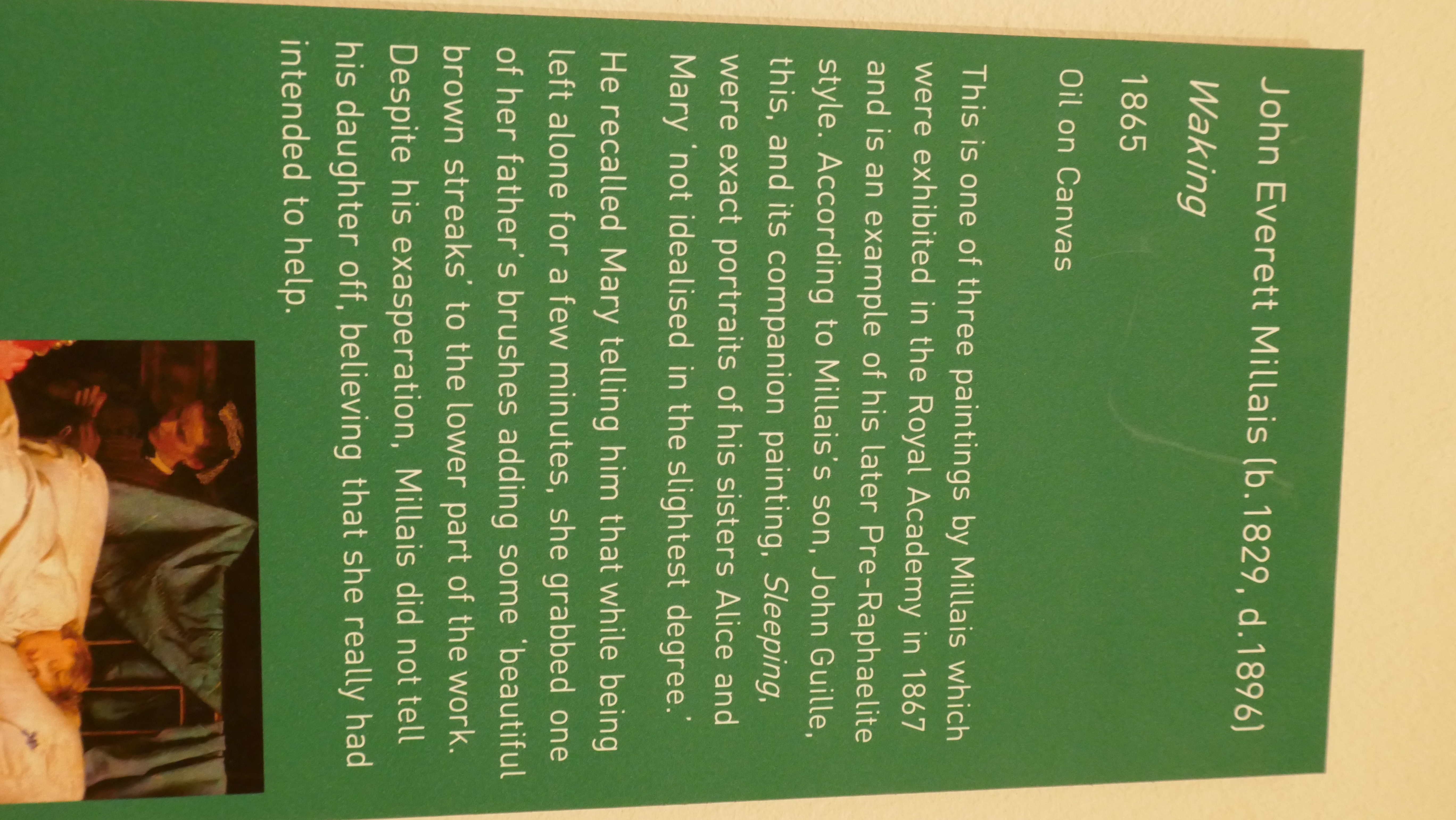
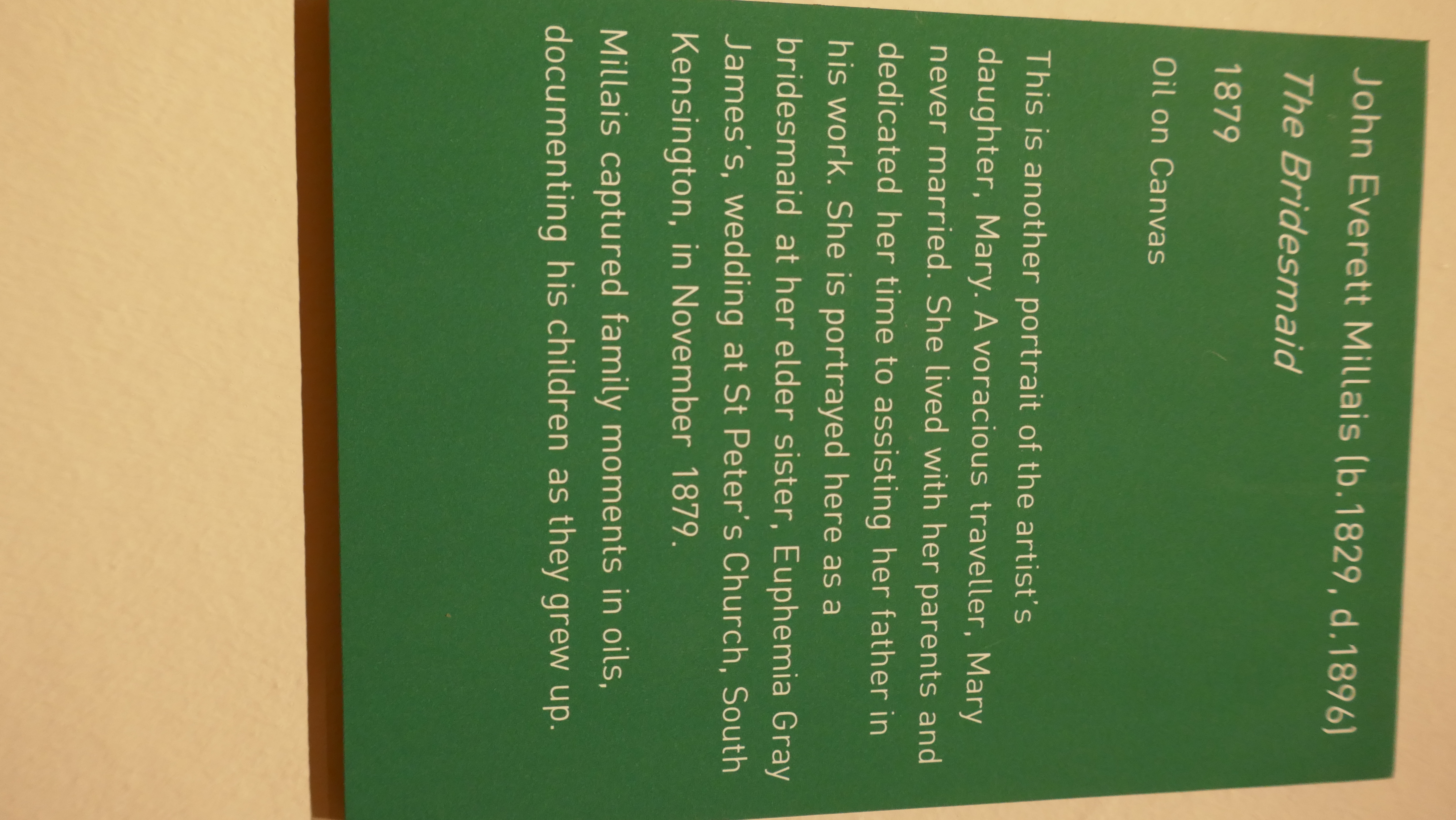
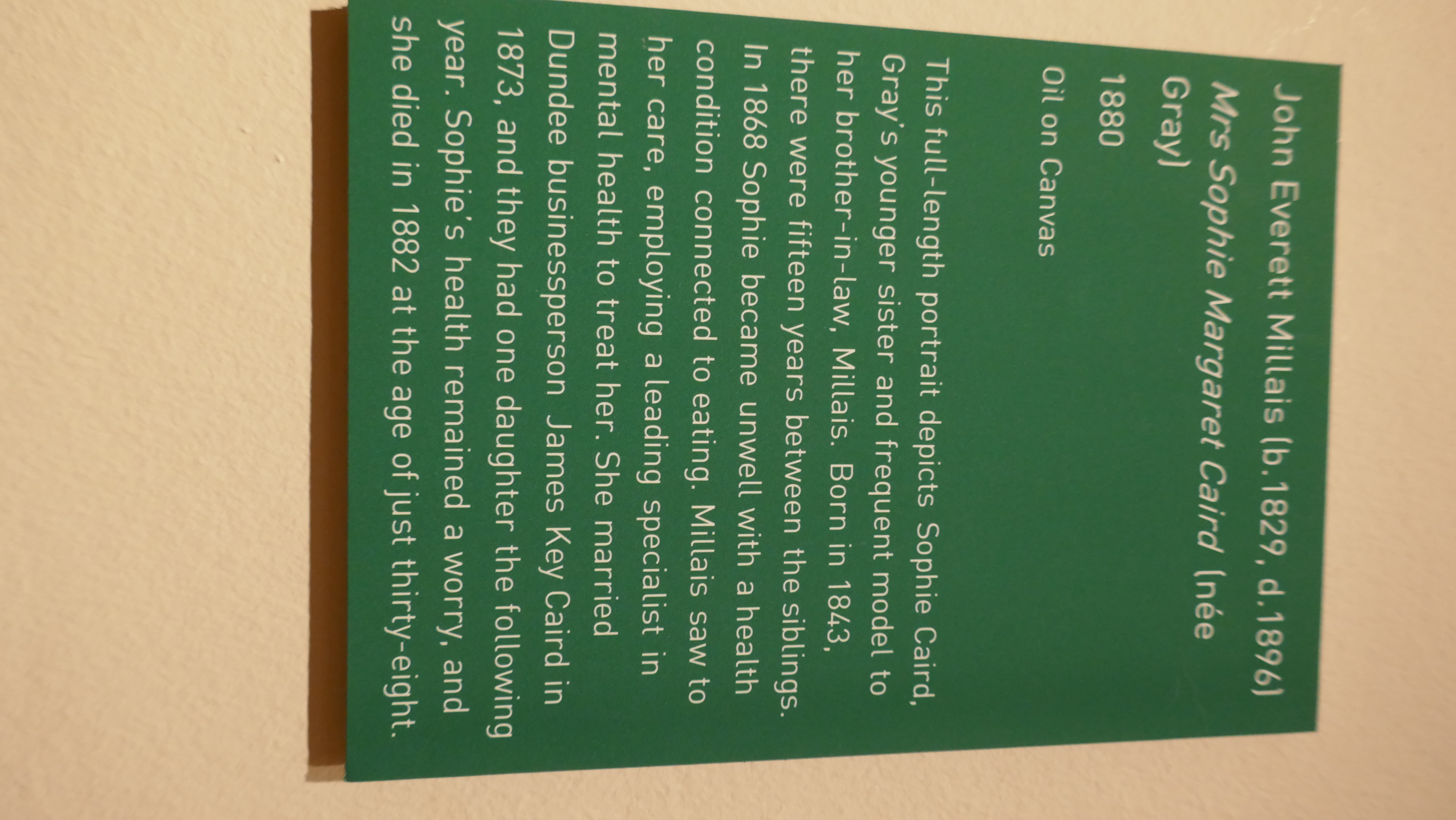
Millais married Effie in 1855. They settled in Perth for some years and even after moving to London in 1861 they continued to make Perth and Perthshire an integral part of their life, returning frequently.
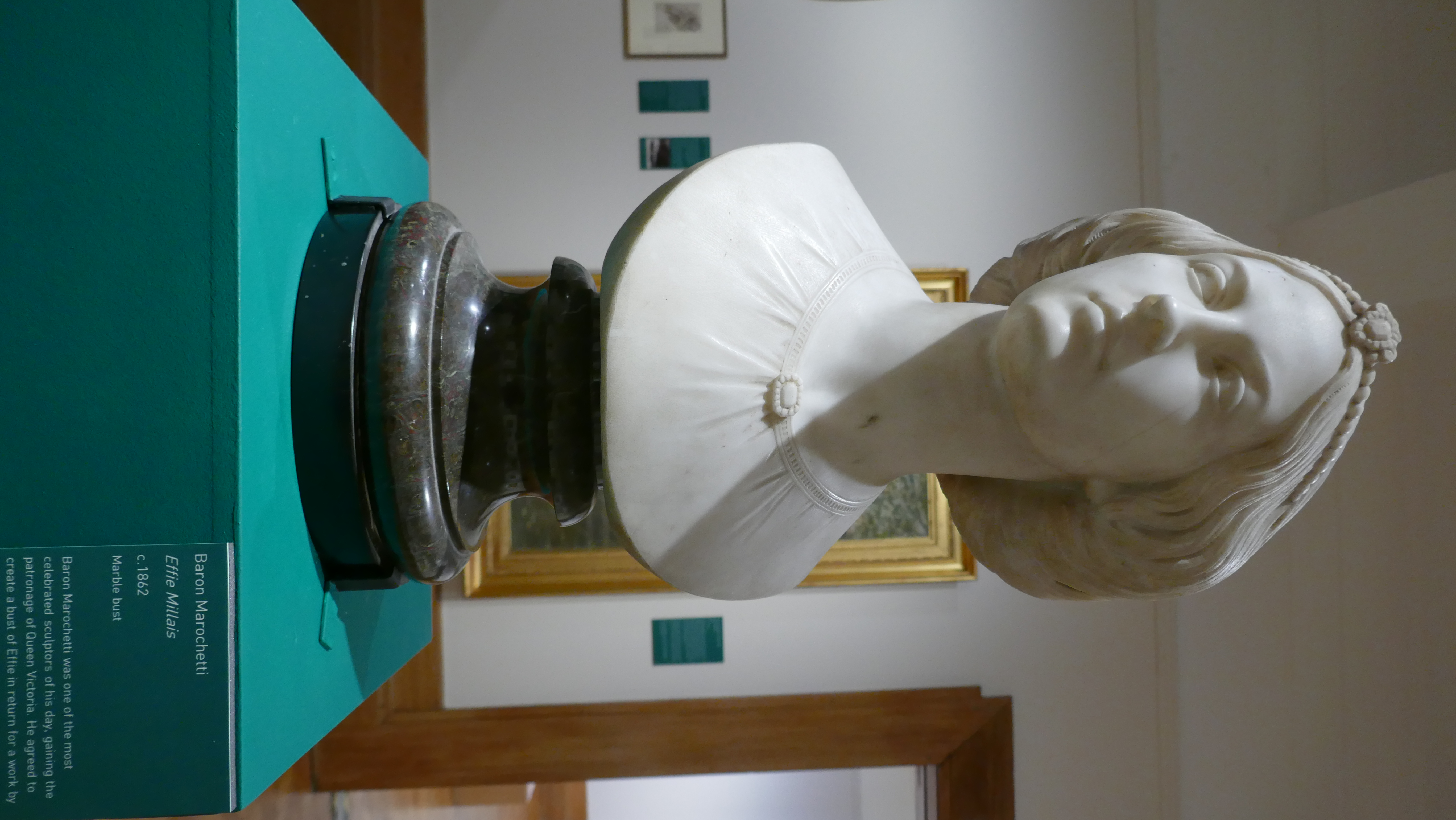
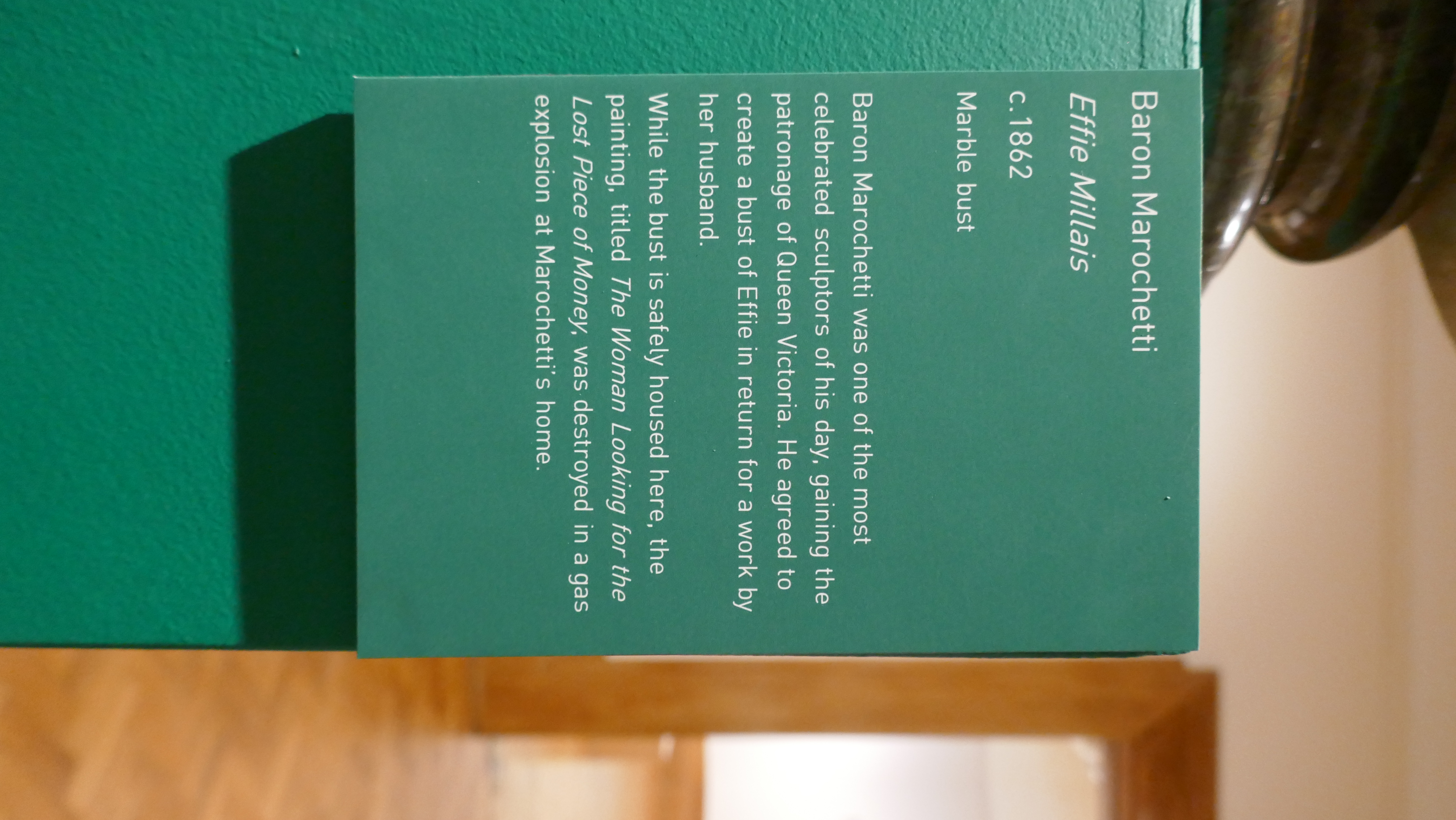
A significant portion of the exhibition is devoted to images of Millais and his wife. There is a portrait of Millais c.1880 by an unidentified Florentine painter, a copy of the self-portrait which Millais sent to the Uffizi Gallery in Florence at that time. Dating from 1882 there is a fine bronze portrait bust of him, showing him as the confident professional painter he had become, by Joseph Edgar Boehm. There is also a hint of sadness about his face. The tragedy of severe illness was not unknown in their closely-knit family. As a companion piece there is a white marble portrait bust of Effie by Baron Marochetti. Both sculptors were great favourites of Queen Victoria, and these are fine examples of their work.
Among the portraits of the Millais children there is one of Alice Sophia Caroline (known as ‘Carrie’), the subject of many of her father’s paintings, who became a close friend and confidante of the composer Edward Elgar.
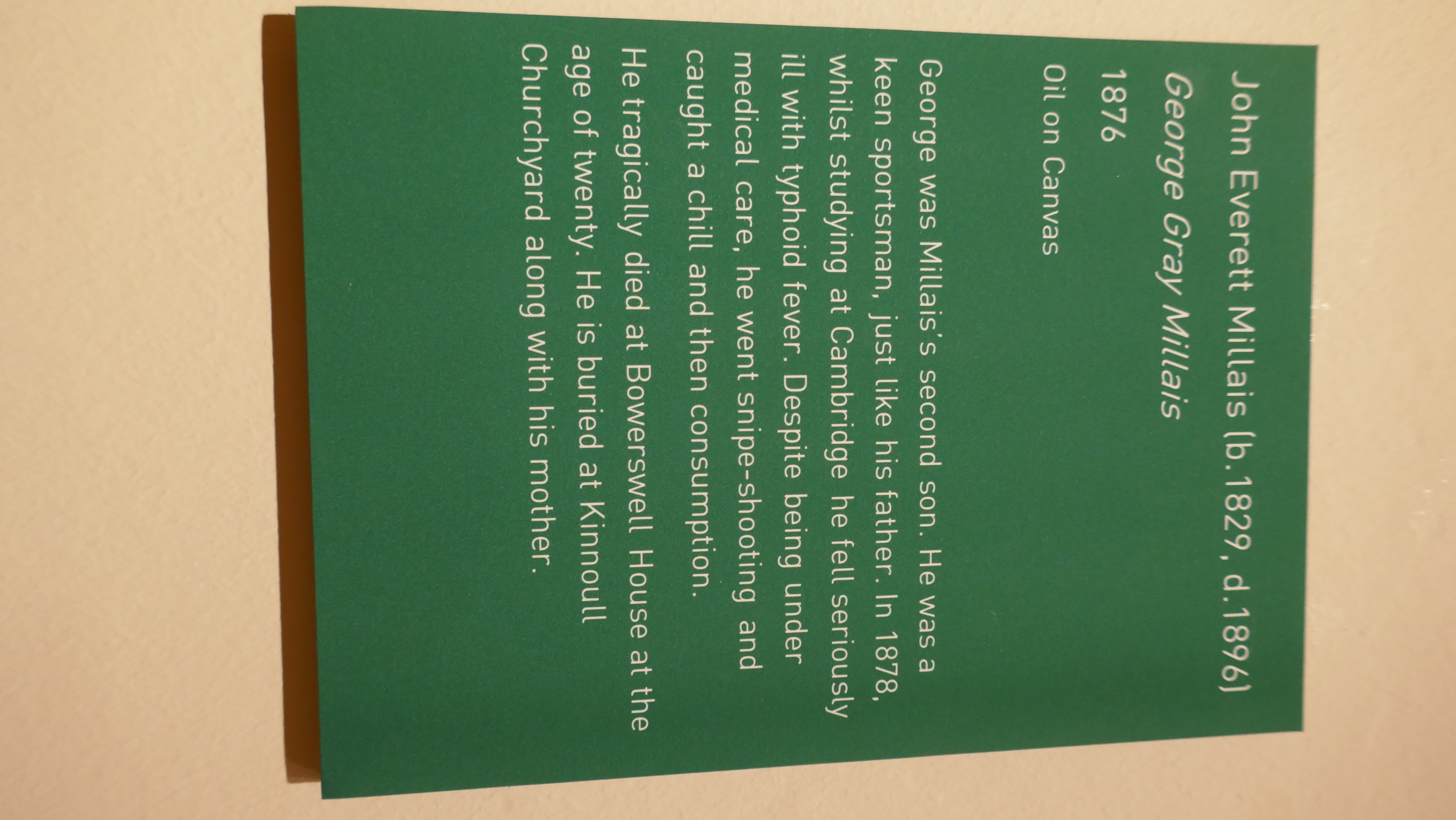
There is also a portrait of George, second son of Millais and Effie, who died at Bowerswell House at the age of twenty. He, later his mother, and altogether a good number of the Gray and Millais families, were buried in a vault in the Kinnoull church burial ground.
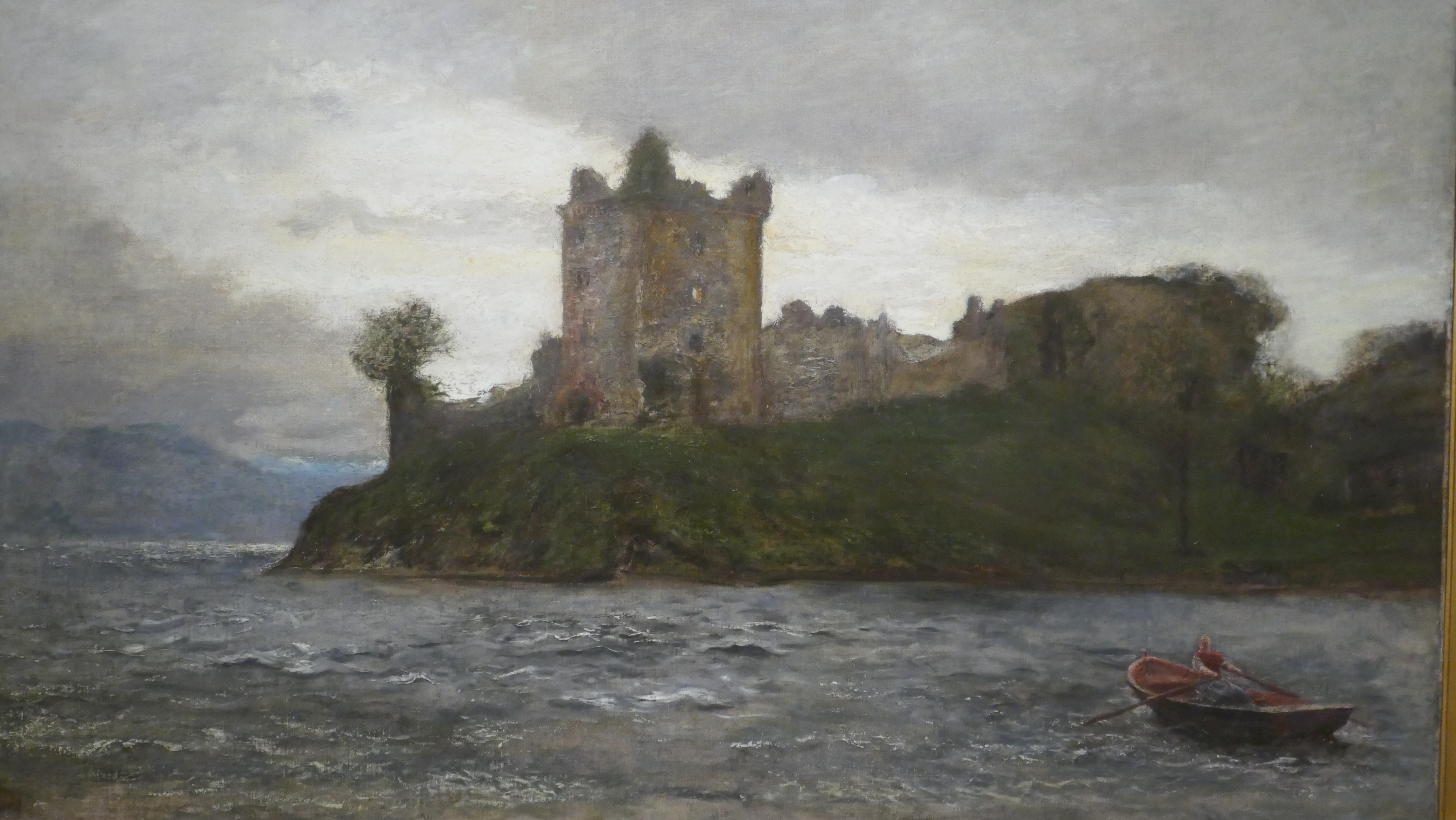
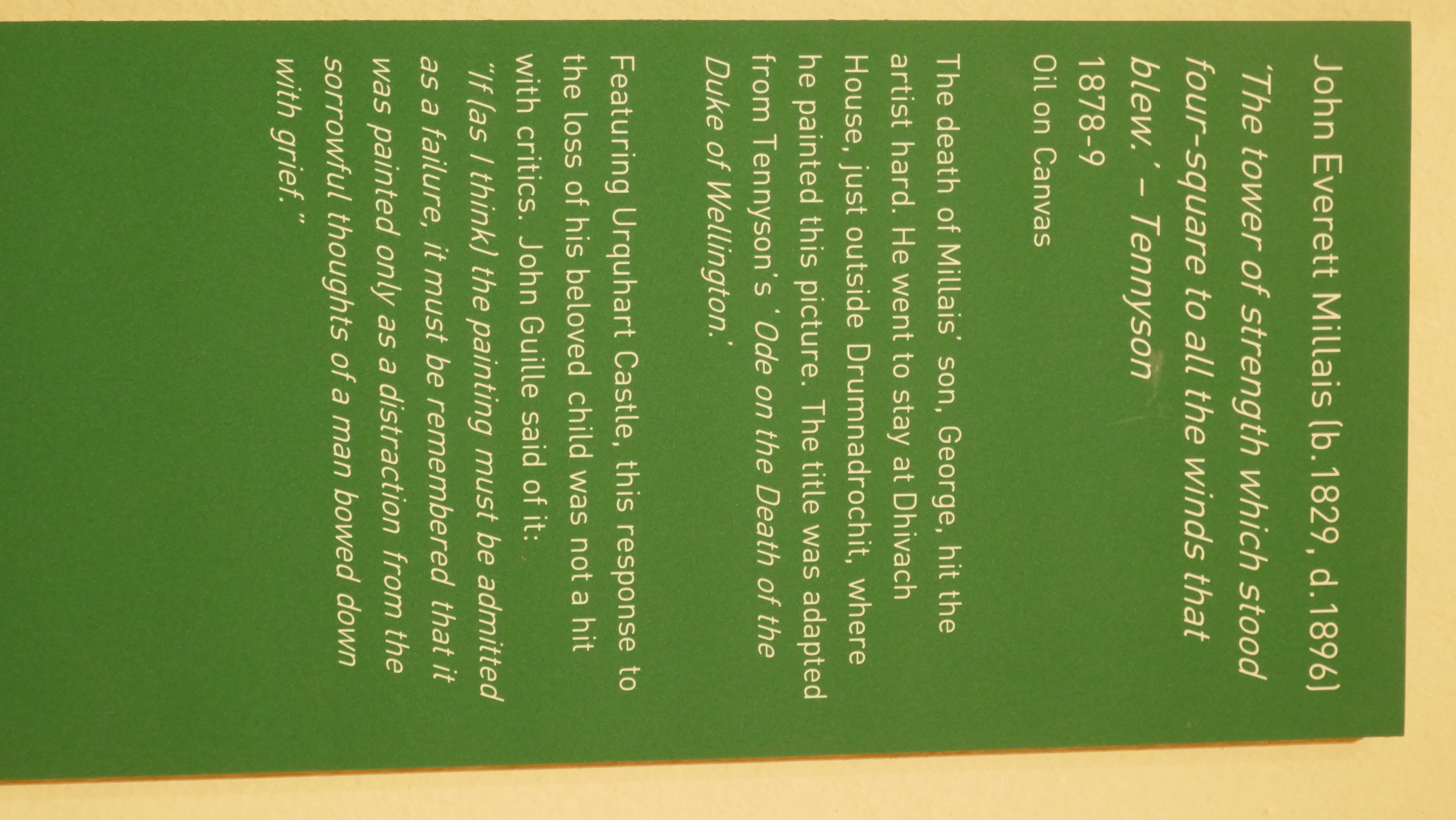
Landscapes, with figures and buildings in them, were among Millais’s specialities and it comes as something of a shock to see the dark painting of Urquhart Castle, close to Drumnadrochit, to which Millais retired in sadness and distress after George’s death in 1878.
Millais, by then (1896) President of the Royal Academy and a Baronet, is buried in the crypt of St Paul’s Cathedral, under a ledger stone superbly combining black marble and brass, designed by the architect Richard Norman Shaw, RA. Nearby lie various friends including Lord Leighton PRA (1830–96) and Sir Joseph Edgar Boehm (1834–90).
PETER BURMAN, 3 August 2025